Česta pitanja o radnim listovima za bosanski jezik
Questions about the Bosnian worksheets · Fragen zu den Arbeitsblättern für Bosnisch
Kratki odgovori na pitanja koja roditelji najčešće postavljaju.Short answers to the questions parents ask most often.Kurze Antworten auf die häufigsten Fragen von Eltern.
Kako koristiti radne listove za bosanski jezik?How do I use the Bosnian worksheets?Wie nutze ich die Arbeitsblätter für Bosnisch?
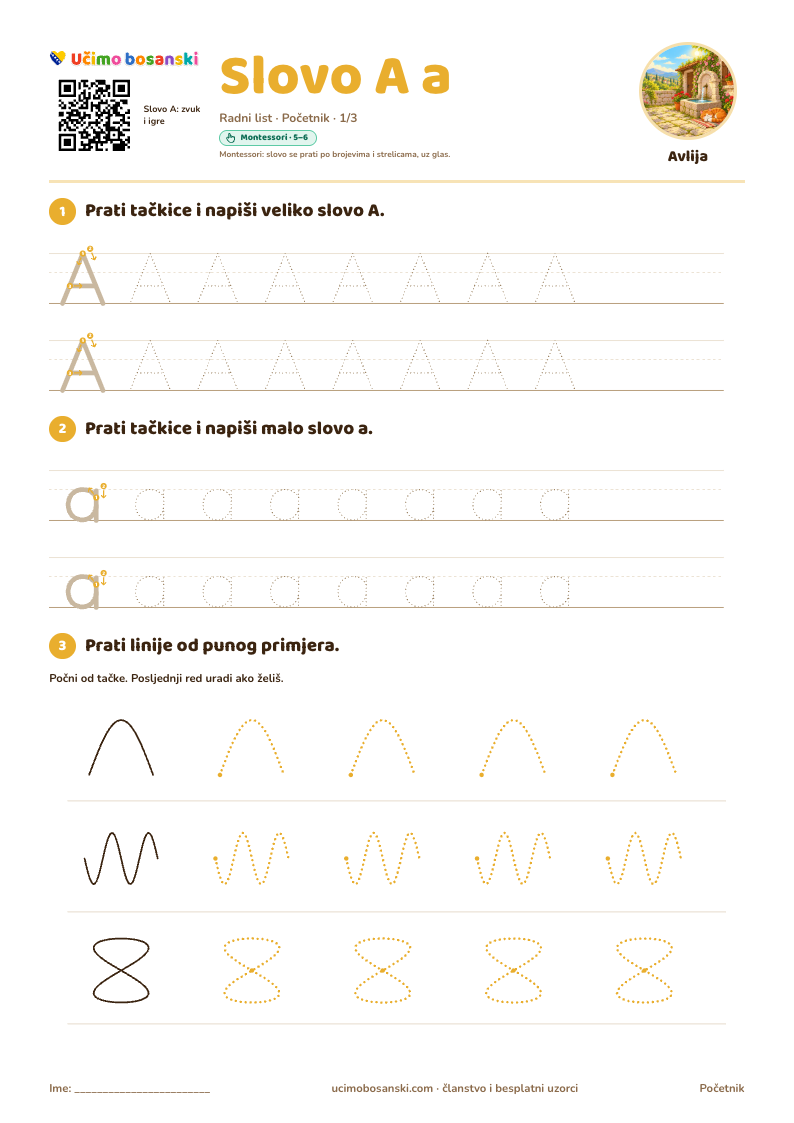
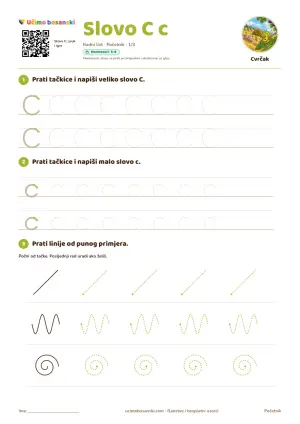
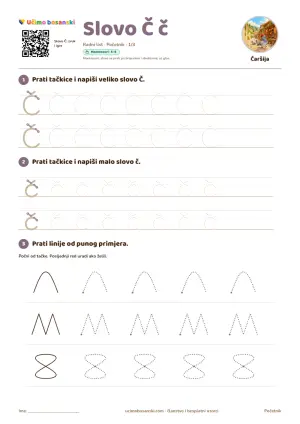
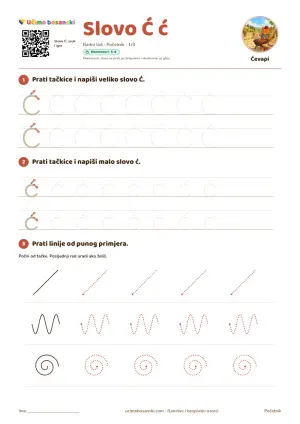
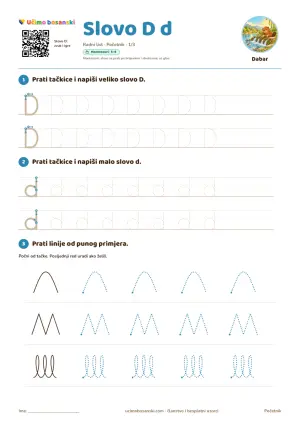
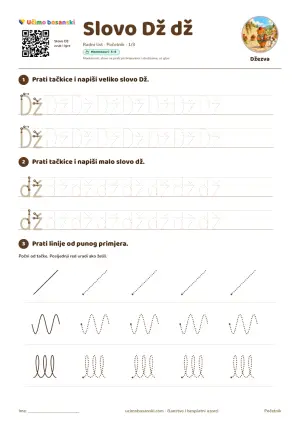
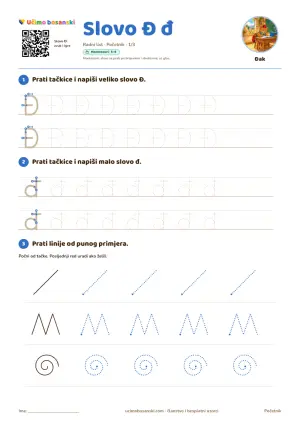
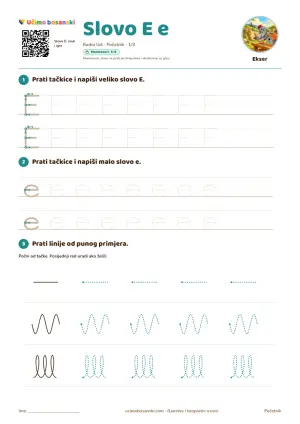
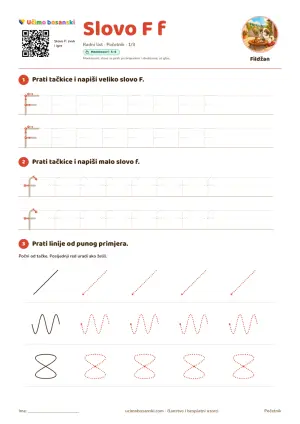
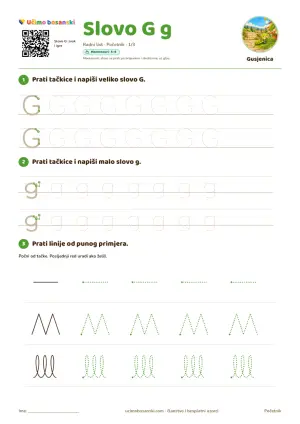
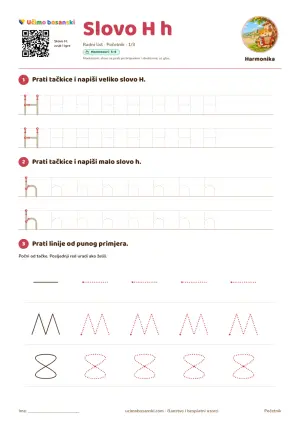
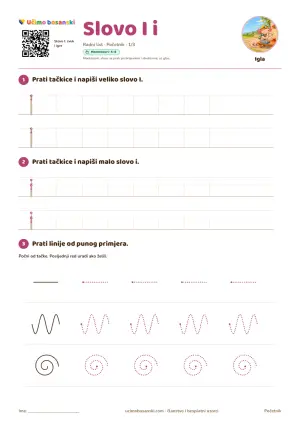
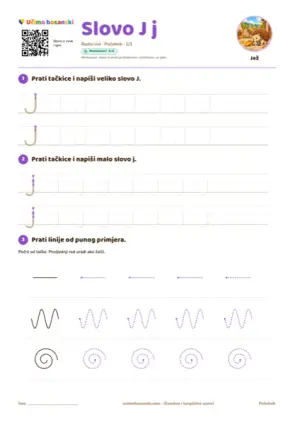
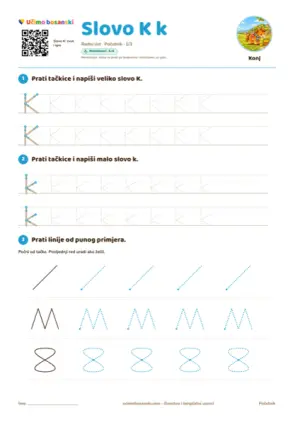
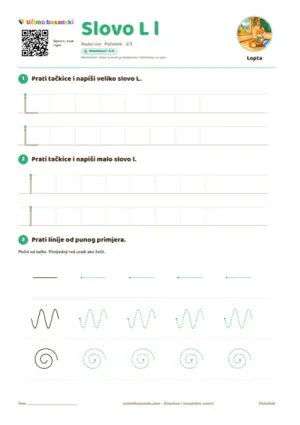
Izaberite slovo i nivo, ispišite PDF ili izaberite „Radi online” i radite na ekranu, desetak minuta dnevno. Svaki dan izlazi novi radni list dana.
Choose a letter and a level, print the PDF or choose “Radi online” (work online) and work on screen, about ten minutes a day. A new worksheet of the day comes out every day.
Wählt einen Buchstaben und eine Stufe, druckt das PDF oder wählt „Radi online“ (online arbeiten) und übt am Bildschirm, etwa zehn Minuten am Tag. Jeden Tag erscheint ein neues Arbeitsblatt des Tages.
Koji nivo da izaberem?Which level should I choose?Welche Stufe soll ich wählen?
Početnik je za djecu koja tek upoznaju slova, Srednji za djecu koja čitaju kratke riječi, a Napredni za djecu koja čitaju rečenice.
Beginner is for children who are just meeting the letters, Intermediate for children who read short words, and Advanced for children who read sentences.
Anfänger ist für Kinder, die die Buchstaben gerade kennenlernen, Mittel für Kinder, die kurze Wörter lesen, und Fortgeschritten für Kinder, die Sätze lesen.
Jesu li radni listovi besplatni?Are the worksheets free?Sind die Arbeitsblätter kostenlos?
Radni list dana i slovo A su besplatni. Članstvo za 5 € mjesečno otključava sve radne listove, bojanke i sedmična izdanja za ispis.
The worksheet of the day and the letter A are free. Membership for €5 a month unlocks all worksheets, colouring pages and weekly editions to print.
Das Arbeitsblatt des Tages und der Buchstabe A sind kostenlos. Die Mitgliedschaft für 5 € im Monat schaltet alle Arbeitsblätter, Ausmalbilder und Wochenausgaben zum Drucken frei.
Za koji uzrast su radni listovi?Which age are the worksheets for?Für welches Alter sind die Arbeitsblätter?
Za djecu od 4 do 8 godina, za predškolce i prvi razred, kod kuće, u vrtiću i u dopunskoj nastavi u dijaspori.
For children from 4 to 8 years, for preschoolers and first grade, at home, in preschool and in supplementary classes in the diaspora.
Für Kinder von 4 bis 8 Jahren, für Vorschulkinder und die erste Klasse, zu Hause, in der Kita und im Ergänzungsunterricht in der Diaspora.
Gdje su aktivnosti inspirisane Waldorfom i Reggio Emilia pristupom?Where are the activities inspired by Waldorf and Reggio Emilia?Wo sind die von Waldorf und Reggio Emilia inspirierten Aktivitäten?
U Ranom učenju materijali „Prati putanju”, „Igraj se rukama” i „Izreži i složi niz” imaju dodatnu stranicu: kratku priču, crtanje iz oblika i razgovor o djetetovoj ideji. Školski listovi uz priču imaju uputu za vlastiti crtež na poleđini. Waldorf je poticaj za priču i maštu, a Reggio Emilia za izbor, promjenu i bilježenje djetetovih riječi. Nema jednog obaveznog izgleda crteža. Dnevna izdanja uključuju ove zadatke od 25. novembra 2026.; starija izdanja zadržavaju svoj sadržaj. To su papirne aktivnosti inspirisane pristupima. Više na stranici Kako pravimo materijale.
In Early learning, “Prati putanju”, “Igraj se rukama” and “Izreži i složi niz” have an extra page: a short story, drawing from a shape and a conversation about the child’s idea. School worksheets include an instruction to draw on the back after the story. Waldorf inspires stories and imagination; Reggio Emilia inspires choice, changes and recording the child’s words. There is no required drawing result. Daily editions include these tasks from 25 November 2026; earlier editions keep their content. These are paper activities inspired by the approaches. See How we make the materials.
Beim frühen Lernen haben „Prati putanju“, „Igraj se rukama“ und „Izreži i složi niz“ eine zusätzliche Seite: eine kurze Geschichte, Weiterzeichnen einer Form und ein Gespräch über die Idee des Kindes. Schulblätter enthalten zur Geschichte eine Zeichenanleitung für die Rückseite. Waldorf regt Geschichte und Fantasie an; Reggio Emilia regt eigene Entscheidungen, Veränderungen und das Festhalten der Worte des Kindes an. Es gibt kein vorgeschriebenes Zeichenergebnis. Tagesausgaben enthalten diese Aufgaben ab dem 25. November 2026; frühere Ausgaben behalten ihren Inhalt. Die Papieraktivitäten sind von den Ansätzen inspiriert. Mehr unter Wie wir die Materialien machen.